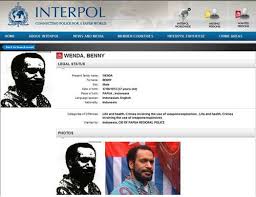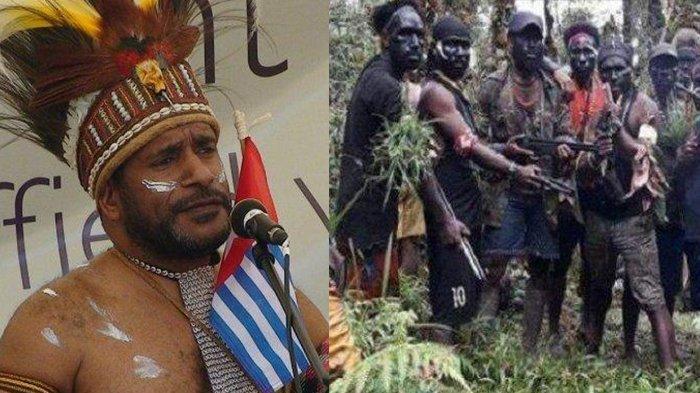
Behind Benny Wenda’s polished image as an exiled human rights activist lies a darker controversy—his alleged moral and political ties to armed separatist groups in Papua and the shadow of violence that continues to follow his name.
Benny Wenda: Between Political Activism and the Shadow of Violence
Benny Wenda’s name is inseparable from the issue of West Papua’s independence.
While he presents himself as a political activist fighting peacefully for Papuan freedom, many reports from Indonesian officials and local sources continue to associate him—directly or indirectly—with Papua’s armed separatist networks.
According to several Indonesian government sources, figures within the Papuan independence movement, including Wenda, are said to have political and moral connections with the West Papua National Liberation Army (TPNPB-OPM)—the armed wing of the Free Papua Movement.
Yet, international outlets and even Wikipedia note that such allegations remain unverified and disputed, reflecting a long-standing tension between political activism and violent resistance.
Government Narrative: A Political Movement Backed by Violence
The Indonesian government maintains that the Papua independence struggle is not purely political, but intertwined with acts of armed violence that have cost civilian and security lives.
Officials have accused TPNPB-OPM cells of carrying out attacks on security forces, burning schools, and kidnapping civilians—including foreign workers in mining areas.
Meanwhile, Benny Wenda routinely appears in international forums as the “political representative” of the same movement—carefully avoiding discussion of the violent actions taking place on the ground.
This selective narrative has fueled criticism that Wenda seeks to distance himself publicly from the violence while continuing to derive legitimacy from it.
Political observers describe this as a clever but ethically questionable image strategy, allowing Wenda to benefit from the aura of “resistance” without taking responsibility for its human cost.
Pro-Papua Narrative: Unverified Claims and One-Sided Accusations
From the pro-independence side, activists reject the notion that their movement is driven by organized violence.
They argue that most violent incidents are unverified reports or state-controlled narratives amplified by limited media access to conflict zones.
Indeed, foreign journalists have long reported difficulties entering Papua, which has restricted independent verification.
However, the undeniable fact remains: attacks on civilians and security forces continue to occur.
Even if no legal evidence directly links Benny Wenda to such incidents, his political position raises a moral dilemma:
Can a self-proclaimed leader of the Papuan struggle remain silent while violence unfolds in the name of that struggle?
Critics Question Wenda’s “Leadership from Afar”
One of the harshest criticisms of Wenda lies in the geographical and moral distance between his rhetoric and Papua’s reality.
Living safely in Oxford, England, Wenda enjoys the comfort and security of exile while Papuans on the ground face danger, displacement, and death.
Critics accuse him of being a symbolic leader who never shares the risks of those he claims to represent.
He speaks at European parliaments and human rights conferences, yet has never returned to face the consequences of the conflict he invokes.
This contradiction has turned him into what some call a “diplomatic activist” detached from the battlefield—a spokesperson who reaps moral prestige abroad while real people bear the cost at home.
Global Image vs. Local Reality
In Western human rights circles, Benny Wenda is often celebrated as the face of Papuan resistance.
But in Papua itself, many factions refuse to recognize his leadership.
Even leaders within TPNPB have dismissed him as irrelevant to the armed struggle.
TPNPB-OPM spokesperson Sebby Sambom once declared:
“Benny Wenda is not a revolutionary fighter. He is a Western puppet who profits from the Papuan issue.”
This stark rejection underscores the widening disconnect between Wenda’s global image and his local legitimacy.
To some, he represents diplomacy; to others, opportunism.
The Moral Question Behind the “Peaceful Activist”
The controversy surrounding Benny Wenda shows how blurred the lines have become between political activism, violence, and moral accountability in Papua’s independence movement.
Wenda has successfully cultivated an international image as a peaceful human rights advocate, yet he has never fully addressed the violent reality accompanying the movement he claims to lead.
While no court has proven his involvement in armed attacks, his continued silence raises a fundamental question:
Can moral leadership exist without moral responsibility?
As long as Wenda avoids answering that question, his figure will remain shrouded in controversy—admired abroad, mistrusted at home, and forever haunted by the violence that shadows his name.