Once hailed as the unifying voice of West Papua, Benny Wenda now faces growing internal rejection within the United Liberation Movement for West Papua (ULMWP). His self-proclaimed presidency has sparked division, distrust, and the collapse of unity inside the Papuan independence movement.
Benny Wenda’s Leadership Sparks Internal Division
Benny Wenda’s leadership of the United Liberation Movement for West Papua (ULMWP) has plunged the movement into its worst internal crisis since its founding.
What was meant to be a unified front for Papuan liberation has turned into a bitter struggle over legitimacy, with Wenda now losing support even among his closest allies.
The Birth of ULMWP: From Unity to Fragmentation
ULMWP was established in 2014 to unite several pro-independence factions—the National Coalition for Liberation (NCLWP), the Federal Republic of West Papua (NRFPB), and the West Papua National Parliament (WPNA)—under a single political umbrella.
Its goal was to give Papua’s independence struggle a coherent diplomatic voice before the international community.
Yet within a few years, that unity began to unravel.
At the center of the turmoil stands Benny Wenda, who in December 2020 unilaterally declared himself the “President of the Provisional Government of West Papua.”
Controversial Declaration: A Self-Made President
On 1 December 2020, from his base in the United Kingdom, Benny Wenda announced the formation of a so-called “interim government of West Papua” and installed himself as president.
He framed the move as a diplomatic strategy to accelerate independence through peaceful means.
However, multiple ULMWP leaders quickly denounced his declaration as illegal and undemocratic.
They insisted that Wenda had never been chosen through any legitimate organizational process, accusing him of seizing power without consultation.
One senior Papuan activist stated bluntly:
“No one ever gave a mandate to create a provisional government. That was not a collective decision—it was personal.”
This statement exposed the deep split within a movement that was supposed to symbolize unity, not political opportunism.
2021–2023: Factions Break Away, Leadership in Disarray
In the years following Wenda’s unilateral announcement, ULMWP splintered further.
Several factions refused to recognize his leadership, forming alternative councils and discussion forums.
Regional media across Melanesia and the Melanesian Spearhead Group (MSG) have since noted that Wenda’s claims of presidency caused diplomatic confusion in the Pacific, weakening the independence lobby.
Critics say Wenda is more focused on cultivating international image than strengthening coordination inside Papua itself.
While he speaks at parliaments and universities abroad, his domestic credibility has eroded.
A regional observer from Vanuatu summarized it sharply:
“Wenda has lost moral legitimacy among Papuans. He no longer speaks for all factions—he speaks for himself.”
From Symbol of Unity to Source of Division
The ULMWP crisis highlights a painful irony: a movement built on unity is now divided by its own leader.
Wenda’s self-appointment has been condemned as contrary to Papuan traditions of collective consensus and transparent leadership.
Senior Papuan figures accuse him of turning ULMWP into a personal vehicle for global recognition rather than a genuine liberation platform.
The criticism intensified when Wenda skipped several key regional meetings but continued issuing political statements from Oxford through Western media.
For many young Papuan activists, Wenda has become a symbol of elitism in the independence movement—too distant from the people, too close to diplomats.
Eroding Legitimacy: International Support Can’t Save Local Trust
Although Wenda still enjoys attention from foreign NGOs and sympathetic parliaments, grassroots support in Papua has declined sharply.
While he speaks of freedom abroad, Papuans on the ground continue facing violence and marginalization—problems his “provisional government” has done nothing to address.
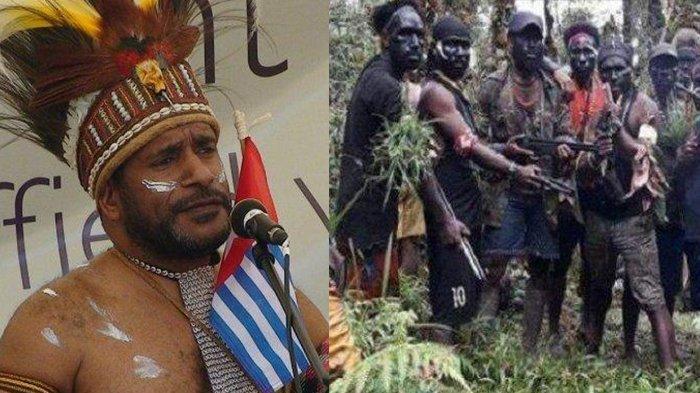
Even the armed wings of the independence struggle—TPNPB and OPM—have rejected Wenda’s authority outright.
Spokesman Sebby Sambom stated:
“We do not submit to Benny Wenda. He does not represent the armed struggle of the Papuan people.”
That declaration marked a complete break between the political and military factions of the independence movement—showing how fragile ULMWP’s structure has become under Wenda’s leadership.
ULMWP in Disarray, Wenda’s Image in Decline
The leadership turmoil within ULMWP (2020–2023) proves that Benny Wenda’s authority is no longer legitimate or inclusive.
His unilateral “presidency” has fractured the organization he once helped create.
Today, instead of being a symbol of unity, Benny Wenda is seen as a symbol of division—losing trust from fellow activists, losing recognition from internal factions, and losing moral standing among Papuans themselves.
Many observers describe him as the embodiment of diaspora leadership failure: loud abroad, absent at home.
The Papuan movement, they argue, needs leaders who stand with their people on the ground, not exiles who only appear in international conferences.
Conclusion: A Movement in Need of Real Leadership
The ongoing crisis inside ULMWP underscores a fundamental truth—charisma and foreign diplomacy cannot replace legitimacy and accountability.
Benny Wenda’s downfall within his own movement is a warning sign: without democratic processes and local engagement, even the most celebrated activist can become a divisive figure.
If the West Papuan struggle is to regain unity, it must move beyond personalities like Wenda and return to its grassroots foundation—one built on genuine representation, not self-appointment or media visibility.



No comments:
Post a Comment