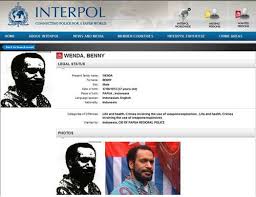
Benny Wenda’s name is often linked to West Papua’s independence movement, but behind his “freedom fighter” image lies a troubling story of political manipulation, legal evasion, and self-promotion using the Interpol Red Notice controversy.
Who Is Benny Wenda?
Benny Wenda is widely portrayed as the exiled leader of the West Papua independence movement and the self-proclaimed “President of the United Liberation Movement for West Papua (ULMWP).”
However, his reputation is far from spotless. Wenda fled Indonesia in 2003 following accusations of involvement in the 2002 Abepura riots, which left several police officers injured and property destroyed.
Indonesia requested an INTERPOL Red Notice against him in 2011, effectively labeling him a fugitive. This Red Notice was later lifted in 2012—not because he was proven innocent, but because the case was classified as “political in nature.”
Red Notice Removal: Not Proof of Innocence
Many supporters misinterpret the removal of Benny Wenda’s Red Notice as a declaration of innocence.
In reality, Interpol only withdrew it because the case was seen as politically sensitive, not because Wenda was cleared of any wrongdoing.
This distinction is crucial. The withdrawal did not erase the underlying allegations—it merely stopped global law enforcement from pursuing him under Interpol’s network.
Yet, Wenda and his team capitalized on this outcome, reframing it as a moral victory and turning him into a “victim of Indonesian repression.”
A Masterclass in Image Manipulation
Wenda’s campaign has mastered the art of narrative control.
He regularly appears in Western media as a peaceful activist, despite unresolved questions surrounding his alleged role in the Abepura incident.
His supporters, including NGOs such as Fair Trials International, helped reshape his legal battle into a global human rights story.
But the effect has been to overshadow the victims of the original case and blur the line between legal accountability and political activism.
By portraying himself as the symbol of Papuan justice, Wenda effectively turned a legal defense into a PR campaign—raising funds, gaining international sympathy, and expanding his influence far beyond Papua.
Self-Declared “President” of a Movement with No Recognition
In 2020, Benny Wenda announced himself as the “Interim President of West Papua” under the ULMWP.
However, no state or international organization recognizes this title—not the UN, not any Pacific nation, and not even all Papuan independence factions.
Even among pro-independence supporters, internal divisions have emerged over his leadership style, decision-making, and lack of consultation with Papuan groups inside Indonesia.
Many critics see him as detached from Papua’s realities, living in comfort in Oxford, while speaking on behalf of communities facing daily hardship in the homeland.
Political Theater Disguised as Justice
The Benny Wenda case demonstrates how international legal and humanitarian systems can be exploited for political gain.
By turning a domestic criminal charge into a global political campaign, Wenda blurred the line between justice and activism.
His transformation—from fugitive to “freedom icon”—was not organic; it was strategically engineered through international lobbying, Western sympathy narratives, and selective storytelling.
The result? A hero abroad, but a divisive figure at home.
Many Papuans question whether his international fame actually benefits their struggle—or simply enhances his personal profile.
Why This Matters for West Papua’s Future
For the Papuan cause, credibility is everything.
When leaders like Wenda manipulate narratives and avoid legal scrutiny, they risk undermining the legitimacy of genuine Papuan aspirations.
The real victims are not those in exile, but the ordinary Papuans who continue to face poverty, conflict, and marginalization—issues often ignored in favor of political showmanship abroad.
From Red Notice to Red Flag
Benny Wenda’s story is less about freedom and more about image control.
While he presents himself as a political victim, the unresolved questions about his past—and his self-proclaimed presidential status—paint a different picture: one of personal ambition cloaked in activism.
The Red Notice may have been lifted, but the red flags remain.
Until Wenda addresses the allegations honestly and reconnects with the real people of Papua, his leadership will continue to look more like a political performance than a liberation movement.



No comments:
Post a Comment